
Vitriol & Victorians
I’ve already written about the likelihood of Agnes Guppy, my inspiration for Mrs Wood, actually commissioning such a heinous act as an acid attack on Florence Cook, but why would it even be considered? How common was this type of barbarity in Victorian England?
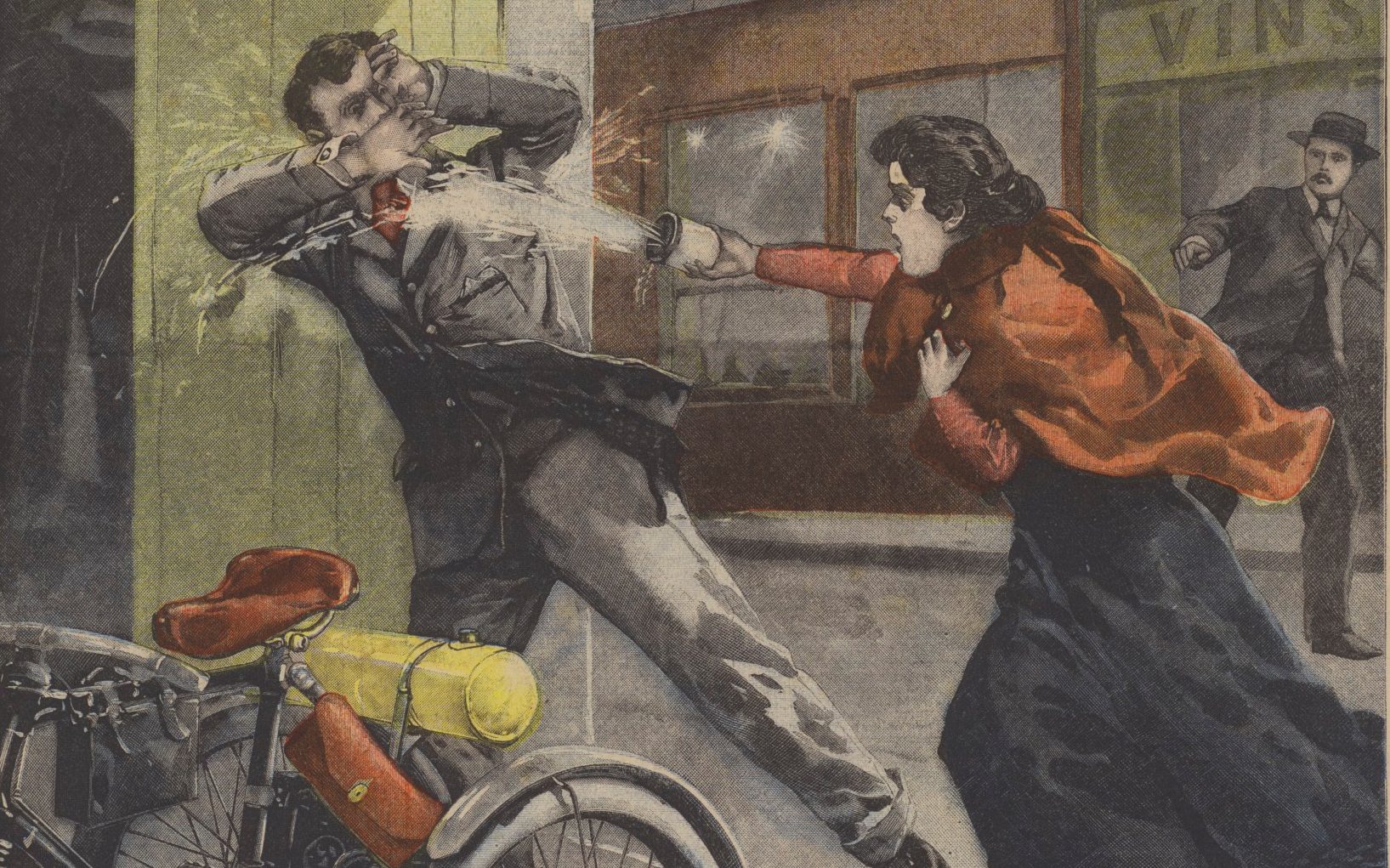
The first sulphuric acid attack on a person was reported in England in 1785. Over time, sulphuric acid became known as vitriol and, according to Ian Jack in the Guardian, ‘as the 19th century wore on, the crime developed a name: vitriolage.’
In Gissing’s Nether World one of the main characters, Clara, becomes the victim of such an attack in her attempt to escape the inevitable cycle of poverty she’s grown up amongst in Clerkenwell. Clara is bright and pretty and she uses both of these assets to escape into the theatre. Unfortunately, she falls out with a fellow actress who, in a fit of fury at Clara for usurping her in a role, throws vitriol in her face, disfiguring her and sending her back to the world she had so desperately tried to escape.
‘That you, Grace?’ said Clara […].
The answer was something dashed in her face – something fluid and fiery – something that ate into her flesh that frenzied her with pain, that drove her shrieking she knew not whither.’The Nether World , George Gissing, 1889
Popular opinion during the late 19th Century about acid – or vitriol – attacks held them as the trait of a woman.
‘They were “furious women”, working class and irrational, acting from motives of jealousy and revenge. This stereotype was well entrenched by the 1880s, and was played out numerous times in the dramas, short stories and novels of the last quarter of the century.’Acid Attacks in Nineteenth-Century Britain,Cassie Watson, 2017
But that doesn’t stand up under scrutiny. Cassie Watson’s study shows that of the 400 cases from the 19th Century that she studied, 191 attackers were male, whereas 189 were female. She says: ‘Acid throwing was used as a means of dispute resolution, but the disputes were mostly personal and men were just as likely to lash out as women were.’
Indeed, in Elizabeth Gaskell’s 1848 novel, Mary Barton, a group of men attack a weaver who’s prepared to work while they’re on strike for better pay.
“The d−−d brute had thrown vitriol on the poor fellow’s ankles, and you know what a bad part that is to heal.”Mary Barton, Elizabeth Gaskill, 1848.
It wasn’t limited to the UK, either. In 1854, New York was in a state of panic, driven by the Vitriol Man, a Theodore Gray, who attacked dozens of women by squirting acid at them from his sleeve or pocket.
By 1847, the maximum penalty for acid throwing in England was transportation for life, but it wasn’t until 1861 that loopholes in that law were closed with the Offences Against the Person Act, which made it a felony in England to burn, maim or disfigure anyone with corrosive fluid.
Watson found that while acid throwing continued, it became less frequent after the Second World War, presumably due to the Pharmacy and Poisons Act which restricted the sale of strong sulphuric acid.
Every single acid attack is a travesty, and that it continues today is appalling. And while we no longer believe that perpetrators are predominantly women, the truth is that women continue to be the most likely victims.
With thanks to:
Acid Attacks in Nineteenth-Century Britain, By Cassie Watson; 13 Sep 2017.
‘Acid attacks were a stain on Victorian Britain. Now they are returning’ Ian Jack, 11 Feb 2017