
Letters & Victorian Londoners
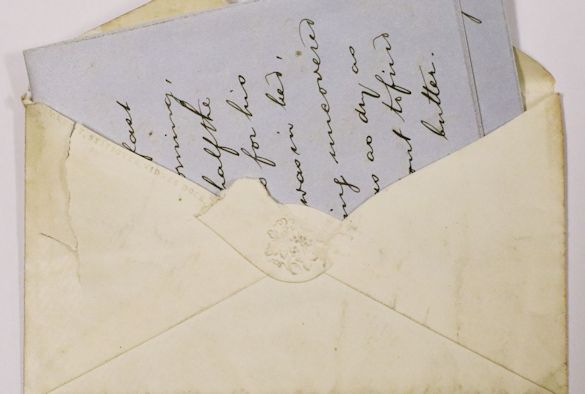
I use letters a lot in my book. I love their immediacy and how you can bring to life lesser characters in the story, giving them a unique voice through word choice and tone. It’s a peek behind the curtain.
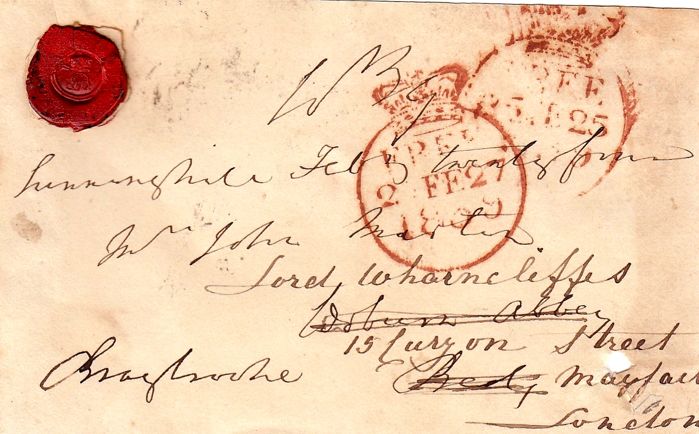
With the introduction of the Penny Post in 1840, cheap communication was suddenly available and letter-writing boomed.
While nowadays we’re used to a Royal Mail delivery of post once a day, according to an article in The New York Times Victorian London received deliveries or post 12 times a day, from 7.30am until 7.30pm, with an expectation of a response to a letter received in the morning to be delivered that evening. With the introduction of mail trains in 1830, letters sent over domestic distances could arrive the next day. The mailbag exchange line-side structure meant that the train didn’t even need to stop to collect as it rattled across the country. In context, during Jane Austen’s time, it could take two days for a letter to get from London to Bath.
DELIVERY & COLLECTION Times
Morning by eight o’clock, for the second delivery.
Morning by ten o’clock, for the third delivery.
Morning by twelve o’clock, for the fourth delivery.
Afternoon by two o’clock, for the fifth delivery.
Afternoon by four o’clock, for the sixth delivery.
Afternoon by six o’clock, for the seventh delivery.For delivery in the country [12 miles radius from central London]
The preceding evening by six o’clock, for the first delivery,
Morning by eight o’clock, for the second delivery.
Morning by twelve o’clock, for the third delivery.
Afternoon by two o’clock, for the fourth delivery.Mogg’s New Picture of London and Visitor’s Guide to it Sights, 1844
Trains were expensive though, and in 1887 the Post Office introduced the large Royal Mail Parcel Coaches which were heavily guarded.
Mail carts and vans – horse-drawn, of course – were also prolific for local distribution. The contractor, McNamara, had a fleet of 260 mail vans in the 1890s, with 600 horses alone in their Finsbury central quarters, 42 on the Brighton road working the Parcels Coach, and 26 for the Tunbridge Wells service.
A PNEUMATIC MAIL RAILWAY
To meet that huge expectation for deliveries, innovation was needed. According to Julian Stray, the senior curator of the British Postal Museum & Archive: “The General Post Office (GPO) was the routing hub of the whole country … You would have had the foreign mails, the inland mails, the country mails, the mails to the provinces. Speed is everything. A loss of two minutes required a written explanation to one of the directors or the Postmaster General.”1
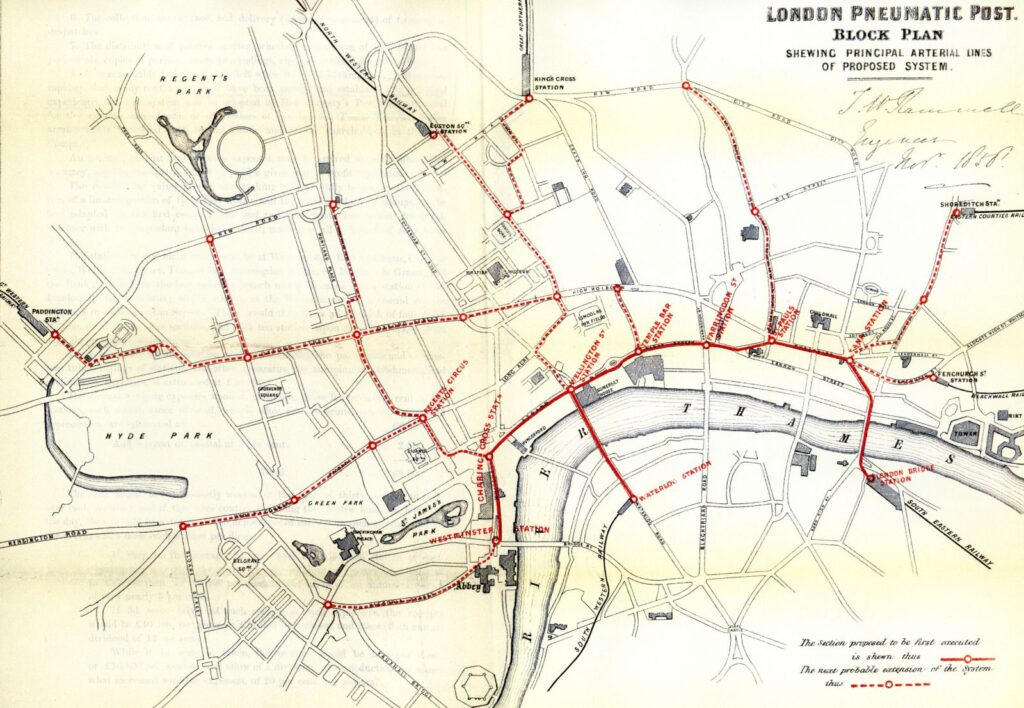
Roads were getting busier, traffic jams a constant issue for those mail-bearing vans, challenges that led enterprising engineers coming up with the world’s first pneumatic railway – the London Pneumatic Despatch Railway – which shuttled mailbags under London throughout the 1860s. Unfortunately, it was scrapped in 1870 – the underground nature of the stations made lugging mail, nightmares when the shuttles broke down and water ingress which resulted in occasional wet mail. All in all, the vans even with all the traffic still proved to be more efficient in hitting those routes on time.
So while Victorian mail was, in theory, slower than email, how often have we had to sit around waiting for a response to an email sent first thing only for it to come in at close of play? Perhaps, in reality, those 12 deliveries a day made it pretty comparable.
Resources
The Birth of Cheap Communication (and Junk Mail), Randall Stross, Feb 20 2010 – New York Times.
https://www.postalmuseum.org/blog/victorian-mail-transport