
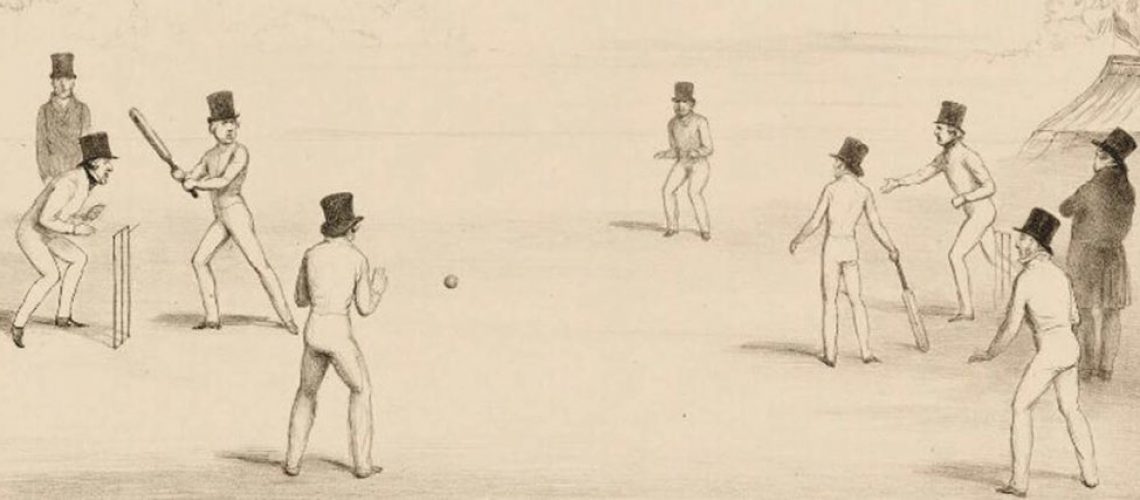
English Cricket!
Okay. Bear with me. I’ve been researching Lords Cricket Ground for my other life and, oh!, it’s rich pickings! Seriously.
According to British History Online (see, I told you it was brilliant), cricket was quite the den of boozy, gambling inequity in the 1700s, quite … vulgar, if you will. But the establishment of Lord’s Cricket Ground seems to have changed that. It was ‘a spot that has become famous in the annals of the manly and invigorating game of cricket.’ I’m not sure the first words that come to mind today when one thinks of cricket are manly or invigorating, but there we go.
This was a period – mid-1700s on – when public sport was becoming gentrified, moving from the confines of private estates and courts to purpose-built public arenas. And in doing so, sporting pursuits changed (according to this rather excited writer in 1878) ‘there is nothing in which a more visible improvement has taken place than in our sports. The prize-ring and bear-garden, dog-fighting and ratkilling, are things of the past.’ He goes on to say that the growth of ‘noble’ sports introduced a new fashion for temperance, as men with hangovers couldn’t play very well. Fair point, although I’m not sure Rugby was included in this ….
The writer continues with his giddy summation of Victorian England’s sporting prowess: ‘our glorious boatraces, in which we are the first in the world; cricket, in which we have no rivals; and athletic sports—running, jumping the hurdles—in which we have reached to the highest perfection.’
On the Continent these games are almost unknown, and the biggest Frenchman or Prussian is the veriest baby in the hands of an Englishman in any physical display.
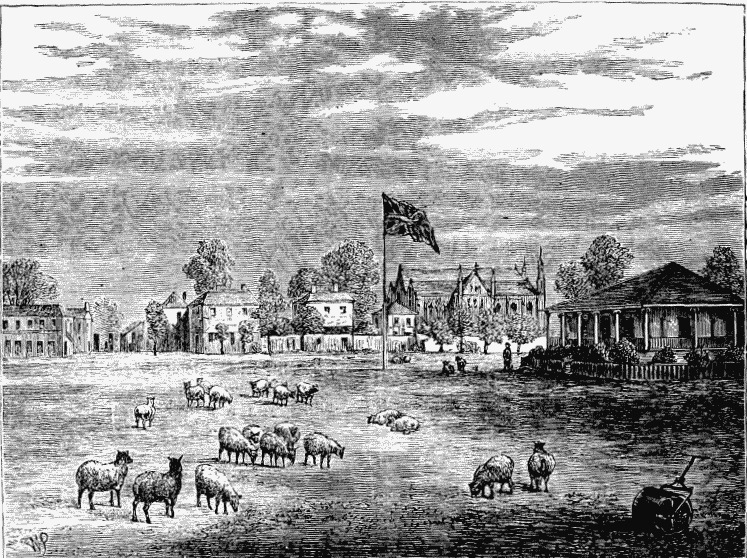
Lords itself is interesting, being perhaps the most visible symbol of genteel reappropriation of working-class sports. In the mid-1700s, as more gentlemen began to play, they established their own club to avoid the need to play with their clerks. Their first home had been at Whites Conduit Fields but these were next to Coram’s field which they apparently found a bit icky: ‘But hard indeed it were in these days to pitch good wickets within view of the Foundling Hospital.’ In response, enterprising Thomas Lord took over the public cricket ground at Dorset Square in St John’s Wood and in 1870, Lord’s Cricket Ground was born.
And there you go. See, oddly interesting.
Source: Edward Walford, ‘Kilburn and St John’s Wood’, in Old and New London: Volume 5 (London, 1878), pp. 243-253. British History Online http://www.british-history.ac.uk/old-new-london/vol5/pp243-253 [accessed 20 May 2022].